




Golden lights adorn houses and trees at every corner, and happy reindeer inflatables sit atop frosty lawns. The most awaited time of the year is here, and holiday cheer fills the air as winter break approaches. However, for some people, the holiday season can bring on stress and sadness associated with seasonal depression, financial struggles, or bad memories associated with this time of year.
According to Mental Health America, around 5% of the U.S. population experience seasonal depression. This condition affects many aspects of a person’s life, from their ability to socialize to changes in appetite.
“It definitely makes it harder to connect with people when you’re feeling sad, [making] it easier to isolate yourself [from] your friends and family,” senior Mehnaz Mohammed said. “It’s also harder to get out of bed; [sometimes it takes me] an hour and a half.”
According to the American Medical Association, Seasonal depression usually falls during fall and winter, when the days get shorter. It is thought to be triggered by the change in the body’s circadian rhythm and decreased sunlight exposure.
“There’s not enough [sunlight because] the days are shorter, and everyone needs vitamin D,” Mohammed said. “[For me], October through December are the worst months.”
Aside from seasonal depression, people experience sadness during the holidays for other reasons, including being away from family.
“When I was in the first teaching job I had, it was far away from home,” teacher Melanie Newberry said. “I did come home for [a bit], but it wasn’t for the [entire time] and it made me really sad because I was used to being at home [for the holidays].”
With the holidays comes expectations of happiness and the pressure to have a “perfect” holiday. However, feeling down during this season is more common than many think.
“People think they’re supposed to be cheerful during the holidays [because] it’s the season of happiness,” Newberry said. “Sometimes that gets into your mind and makes you wonder why you’re not happy. I do think it’s a really common feeling to be sad sometimes, especially if you’ve lost someone and this is the first time they’re not with you.”
No matter what students may be experiencing this holiday season, Newberry continues to support them in the classroom.
“It’s really important to check feature in on kids and make sure they know that you’re there for them,” Newberry said. “Offering coping strategies, helping them find their hobbies or something to distract them is really important because sometimes kids don’t know how to cope.”
One way both students and community members can offer support through the holidays is through volunteering. Every year, Frisco Family Services hosts the Thanksgiving Meal Program which provides a full Thanksgiving meal to lower-income families and those in crisis.
“When crisis strikes, one of the things that people do is they don’t celebrate holidays like they used to,” Laryssa Ingham, Frisco Family Services marketing manager, said.
The meal program provides full meals, including perishable items and even board games, to ensure families have ways to connect with each other during the holidays. Last year, Frisco Family Services served 458 individuals with the help of donations and volunteers.
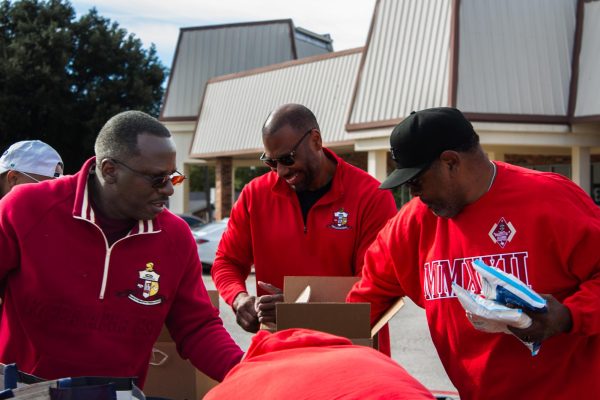
“Our community has stepped up by volunteering and helping us sort food, process food and put food away,” Ingham said. “Last year, a fraternity [came] out and [brought] a whole truckload of food.”
This year’s Thanksgiving Meal Program was on Nov. 22. Recent events like the government shutdown, mass layoffs, and a pause on the Supplemental Nutritional Assistance Program (SNAP) increased the number of people seeking support from Frisco Family Services.
“Even though SNAP [benefits] might have been put back on for the month, [families] are still struggling with other things [such as] utilities and rent,” Ingham said. “That’s where we bridge the gap.”
Frisco Family Services also hosts the Holiday Store Program, started in 2007, which lets families shop for gifts and necessities free of charge.
“Christmas is one of those very expensive holidays,” Ingham said. “It’s a sense of relief for [families] to know that they don’t have to go without [support] during the holidays when they’re [in situations] they have no control over.”
Last year, 175 households shopped from the store. Organizations including Toys for Tots, WFAA Santa’s Helpers, St. Francis and Eagle Gymnastics provide stuffed animals, books, bicycles and sports balls for children.
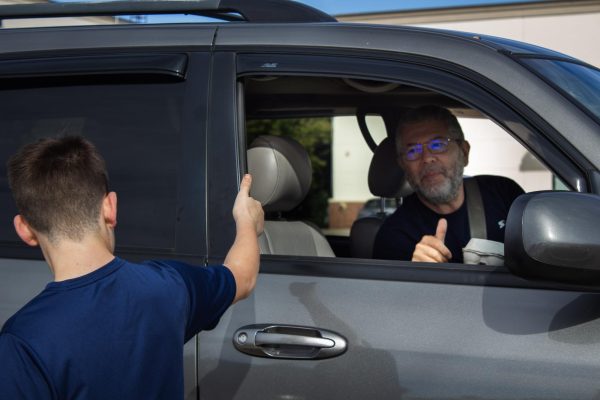
“We service about 12 clients every 30 minutes and they leave with large family-size bags that we help [take] to their cars,” Ingham said.
Students also get involved during the holiday season through hosting food drives and volunteering. The student council hosted a schoolwide food drive benefiting Frisco Family Services from Dec. 1-5.
“This is the first year we’re utilizing chairs and our general council to run the event,” student council sponsor Emily Haecker said. “I’m hoping that with this particular event we can increase our leadership skills.”
Two years ago, the student council received over 1000 donations to help replenish food after Thanksgiving.
“[The best part is] getting with our community and working towards one goal of feeding people during the holidays,” Haecker said.
The National Art Honor Society (NAHS) is also giving back to the community by hosting a chalk drawing and decoration event at the front entrance of the school.
“No matter what you celebrate, it’s going to boost people’s spirits and moods towards the end of the first semester as [things] get a bit harder,” senior NAHS president Evan McCoy said.
In addition to the chalk drawing and decoration event, NAHS adopted an angel to donate gifts to.
“We chose to have an angel this year because every donation counts and everyone needs to chip in and help the community,” McCoy said.
Even though the holidays may be a difficult time for many, there are ways to combat stress and sadness.
“Most of the time, whatever negative thoughts you have are irrational,” Mohammed said. “Don’t isolate yourself and remember you are important.”
This winter, it’s important to remain open-minded and understand that everyone’s situation is different.
“A crisis can happen to anyone,” Ingham said. “One client could be burying a relative [or another] could be going through chemotherapy. There’s people that pull up in nice cars, but we don’t judge because there can still be a need, even if it doesn’t look like it.”


